

Hola Mexziners,
The so-called “death of Tulum” has been plaguing my feed – and I’m sure many of yours – over the past few weeks. The airlines cutting routes, the empty airport, the sargassum. The picture seems bleak, especially for those of us who love traveling around Mexico and are aware of how important tourism is for millions of people across the country. That’s why we decided to go straight to the source. Today, we chat with people whose businesses and hearts are in Tulum to learn how they’re experiencing the town: what’s gone wrong, what’s gone right, and where they see this Caribbean destination headed.
–Cristina Alonso, Managing Editor
“I arrived here 20 years ago,” recalls Ana Alférez, Vendor Manager at Destination Weddings Tulum. “I’m from Mexico City, and I was tired of the pace; I wanted a safer, slower place to live.” Two decades ago, long before the high-end hotels, the restaurants, and the parties, Tulum felt like a secluded oasis. Like so many others, Ana felt the pull of this laid-back tropical paradise, and it’s easy to understand why. To José Luis Hinostroza, chef and co-owner of the Michelin-recommended ARCA restaurant, no place in the world holds as much magic as this corner of the Mexican Caribbean. “I’ve lived in places like Chicago, San Diego, Norway, France, and Denmark,” he says, “and I never stayed anywhere longer than two years. I made a true connection with Tulum. Just picture this: just a few minutes from my restaurant, you can find the Sian Ka’an Nature Reserve; an incredible archaeological site that is still alive, and Maya communities that still practice their own customs and ways of living.”


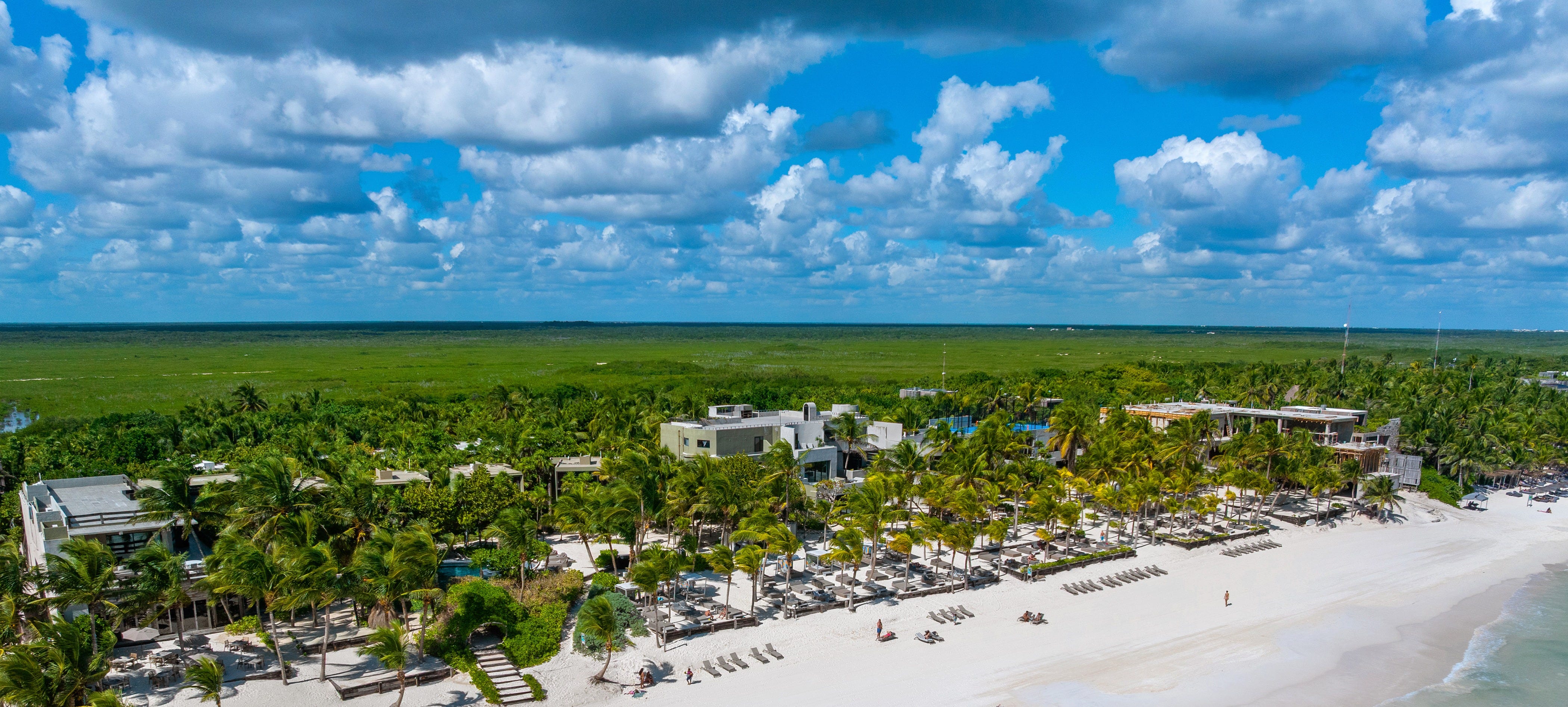
And that’s only the beginning. Tulum’s powdery-white beaches, crystal-clear waters – we’ll get to the sargassum later – and mystical jungle have inspired the birth of an eclectic cultural movement over the years – a place where holistic wellness and yoga retreats meet electronic music and legendary parties and, somehow, it makes sense. The original Tulum spirit brought along concepts like Hartwood, a farm-to-table, live-fire restaurant led by New York imports Eric Werner and Mya Henry; Casa Malca, an art-packed boutique hotel; and chic, design-forward hotels like La Valise Tulum and Nest from Namron Hospitality. “For me, no other beach destination in Mexico or the Caribbean matches Tulum’s concentration of remarkable design, distinctive hotels, and restaurants selected by the Michelin guide,” says Namron founder Yves Naman. “Tulum helped create an aesthetic that many other places have tried to follow.”
Beyond The Tulum Moment
Looking back, it’s easy to spot Tulum’s great boom and its ripple effects. During the pandemic, looser sanitary guidelines and a huge influx of foreigners brought attention to the town like never before. “We arrived here in late 2020, when Tulum’s moment was peaking,” recalls Karla Salazar, director at Vaivén, a coffee-and-wine shop in La Veleta. “We thought it was a great spot to settle in.” But the boom had a darker side. The same lax approach to regulations meant it was easier to build and open everything from restaurants, bars, and hotels to nearly identical apartment buildings, with the town’s infrastructure unable to sustain the growth.