

Hey, Mexzine friends!
We’re in full Día de Muertos spirit now, with the holiday just a couple of weeks away. It’s no secret that this celebration has gained significant popularity over the past few years, both among foreigners and Mexicans who perhaps didn’t celebrate it much before. Perhaps it’s a newfound respect for our traditions, or maybe it’s a combination of social media trends, that 007-inspired Mexico City parade, or a certain Pixar movie whose mere name makes me cry, but the fact is that this centuries-old Mexican tradition is more alive than ever, and that’s something to celebrate. As Luisa Navarro, author of Mexico’s Day of the Dead, said to us during her interview, “Some people criticize Coco, but I’m so grateful for it. I would have loved to have that movie when I was a kid.”
Inspired by this holiday’s colorful iconography and joyful spirit, we’ve created the Mexzine Guide to Día de Muertos: your go-to for everything from historic origins to regional customs, plus events to add to your calendar.
Let’s celebrate!
–Cristina Alonso, Managing Editor
The History & Origins of Día de Muertos
Día de Muertos can be traced back to pre-Hispanic cultures like the Maya, Aztecs, Olmecs, and Toltecs, who believed death is just part of life –not the end, but a transition to another realm. In the afterlife, spirits remain connected to the human world and can, in fact, return for a visit every now and then. This belief, held to this day by many, brings a certain naturalness and comfort to the way we Mexicans approach death: not a taboo, but another part of our journey. In fact, the Aztecs believed the dead traveled to their final resting place in the underworld called the Mictlán, and offered food, water, and tools to accompany their loved ones on the long journey.
With the Spanish conquest in the sixteenth century came Catholic customs and beliefs, including celebrating All Saints’ Day on November 1, and All Souls’ Day on November 2. As with many other aspects of Spanish culture and religion, indigenous communities adopted these holidays and their dates, incorporating elements of Catholicism into their own traditions. The core belief, however, remains the same: death is a continuation of life.
Día de Muertos may look different from one region to another, even from one household to the next. Some people set up altars at home, others go to church, while others search for the perfect pan de muerto throughout the season. Here at Mexzine, we think there’s no right or wrong way to celebrate, as long as there’s a good dose of respect for tradition and curiosity to learn.
Día de Muertos Basics
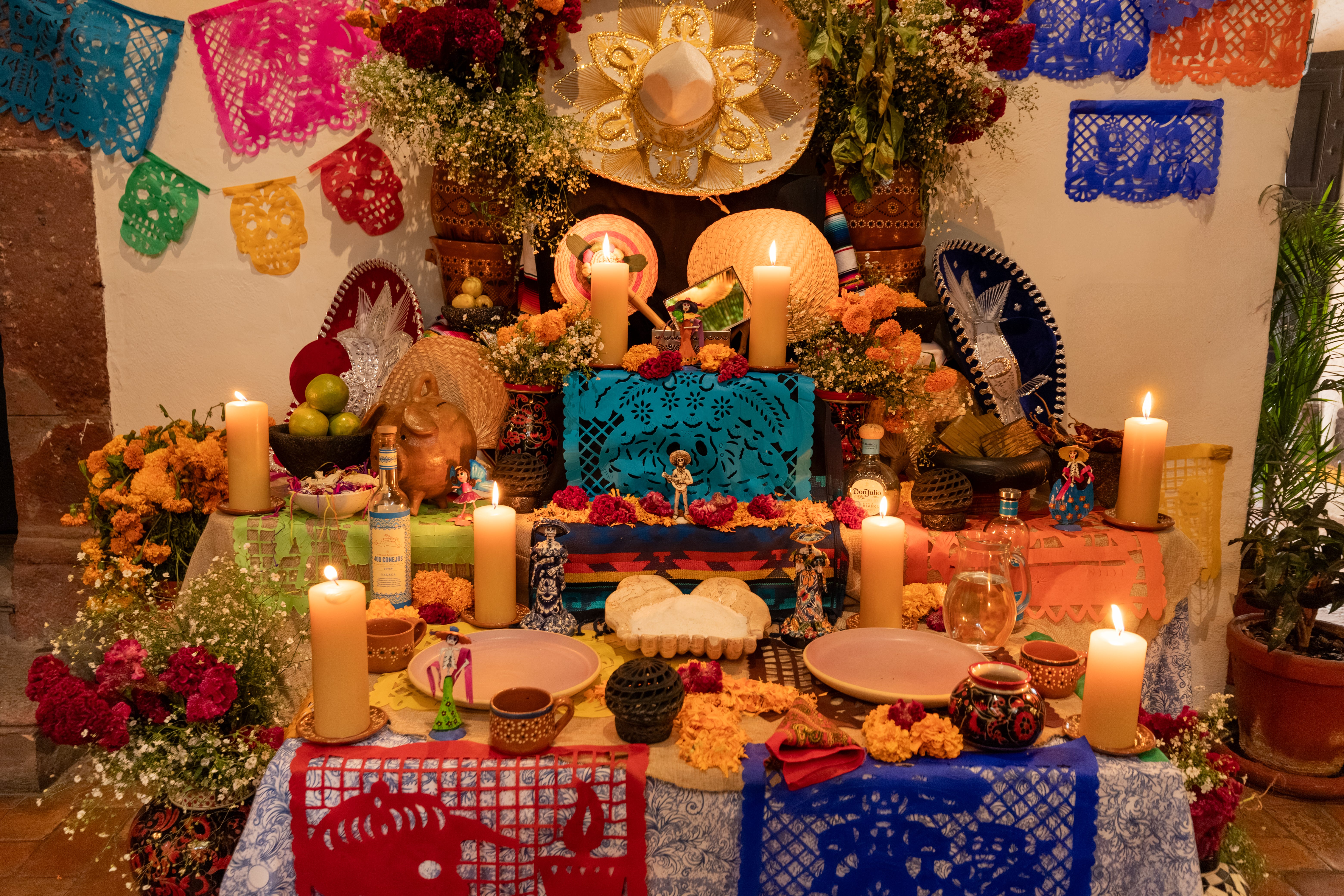
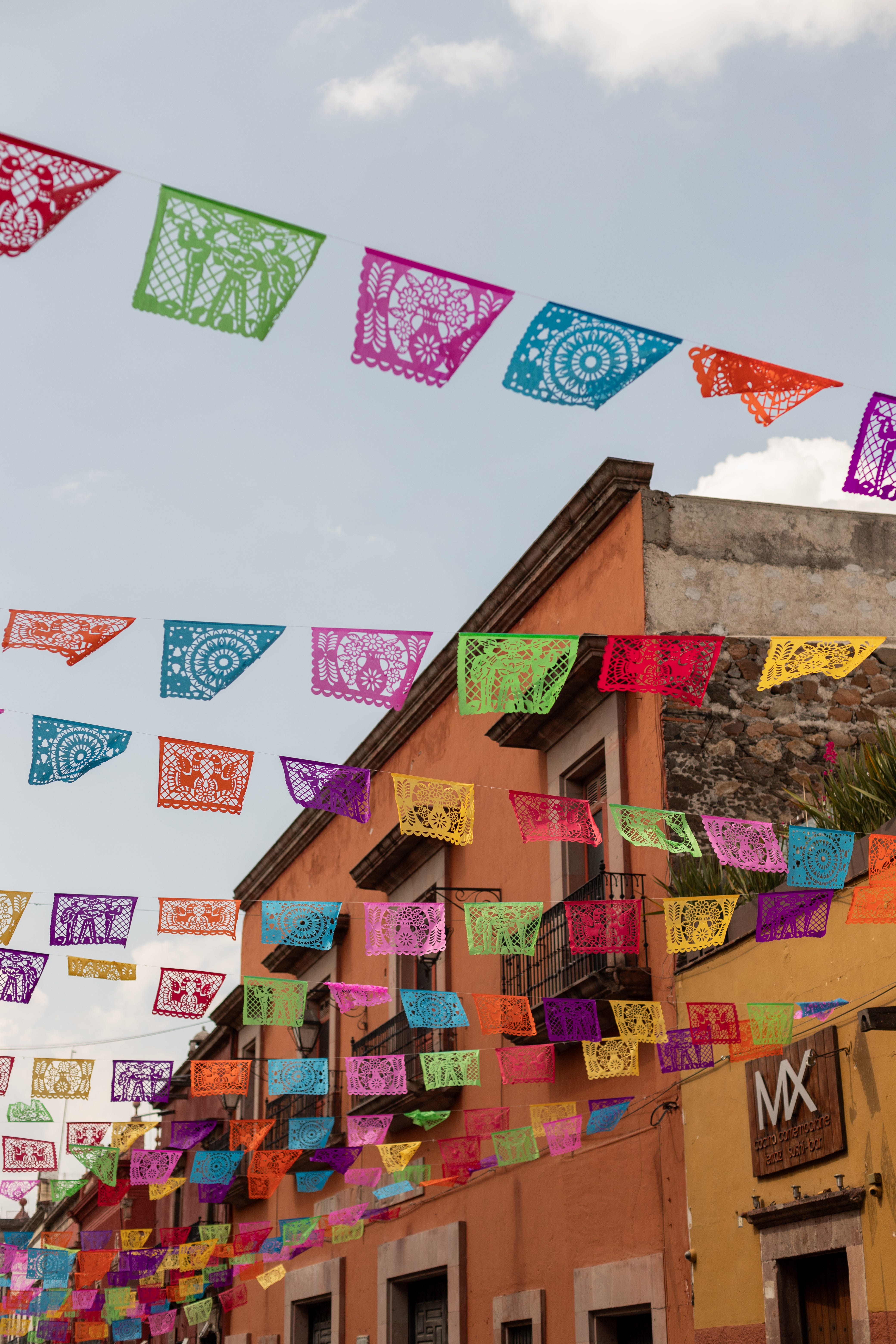
Altars or Ofrendas: Present in homes, cemeteries, and public spaces –from town squares to restaurants and hotels–, altars honor those who have left the physical realm and welcome them during the nights of Día de Muertos. Setup styles can vary greatly, from traditional three-level altars, representing earth, heaven, and purgatory, to simple, homemade versions. Tradition dictates that altars must represent the four elements: water, to purify the soul; fire, present in the candles that light the soul’s path to eternity; earth, in the form of food; and wind, represented in intricate papel picado, whose intricate patterns were believed to let the soul through during its journey. Other possible elements include copal or incense, calaveritas de azúcar (sugar skulls), pan de muerto, and photos of the deceased, as well as some of their favorite foods or personal items.
Pan de Muerto: A highlight of the season for many, this traditional bread is typically made with flour, water, salt, yeast, butter, and eggs, as well as orange peel or essence that gives it a distinct flavor. It is believed that the bread’s round shape represents the mound of earth that covers a coffin, while the long strips on top are shaped like bones. A healthy coat of sugar crowns the pastry. These days, modern pan de muerto-inspired treats can come in the form of coffee drinks, cookies, and cocktails.
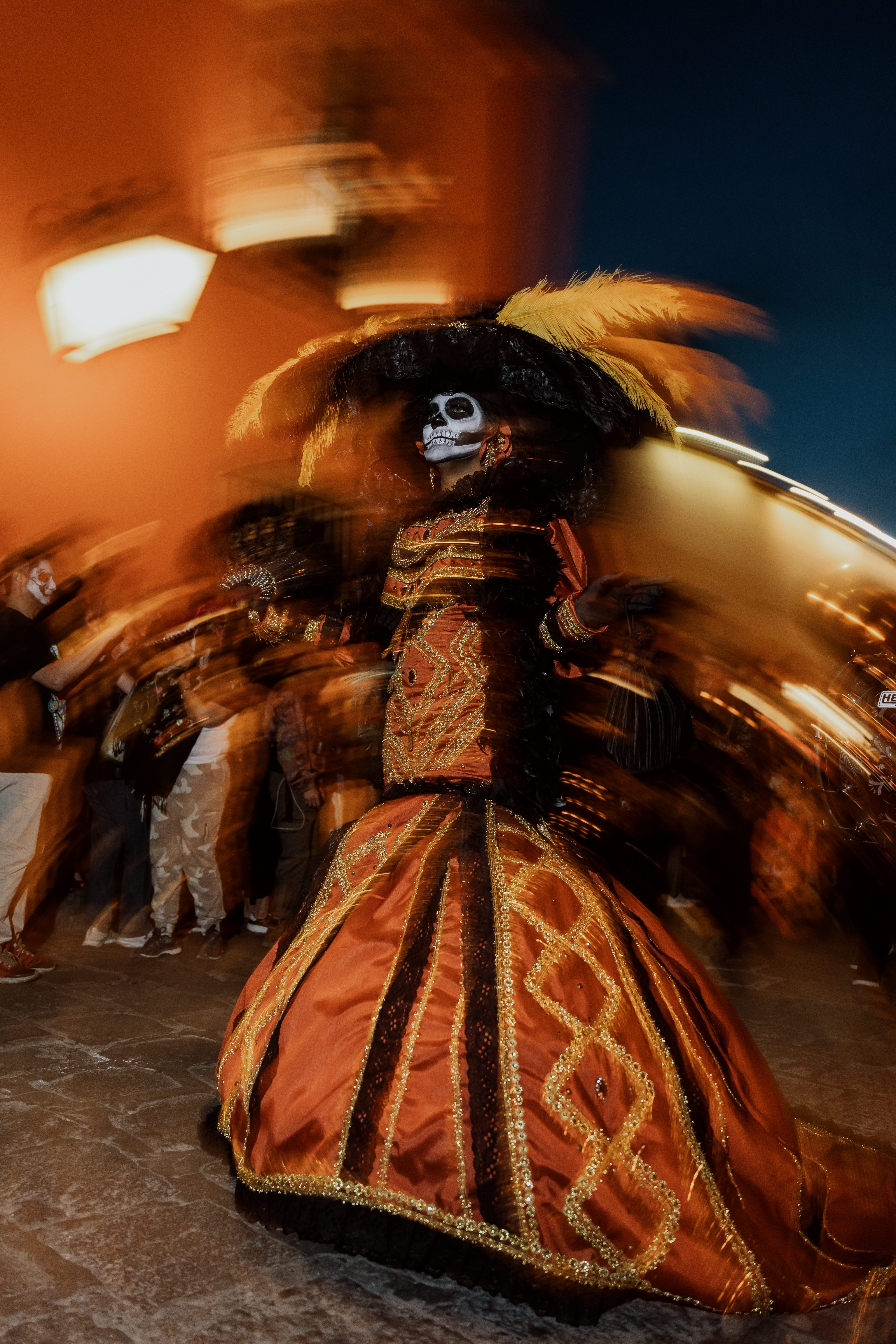
Catrina: Imagined by printmaker José Guadalupe Posada, Catrina is a dapper skeleton lady, usually outfitted in a fancy dress and feathered hat. While she was part of a series of calaveras (or skeletons) that Posada created back in the late nineteenth century, her claim to fame came in 1944 during a traveling art exhibition to the Art Institute of Chicago, with flyers and promotional materials featuring her on the cover. Three years later, she was depicted by Diego Rivera on his iconic mural, Sueño de una tarde dominical en la Alameda Central, surrounded by dozens of characters representing Mexican history.
Cempasúchil Flower: Endemic to Mexico and Central America, this bright orange marigold has been used in religious rituals since the time of the Aztecs, who believed the flowers represented the sun, light, life, and death. The name comes from the Náhuatl word “cempohualxóchitl,” which means 20-petaled flower, referring to its abundant petals. Believed to guide spirits back to earth during Día de Muertos with its color and scent, cempasúchil grows mainly in the states of Hidalgo, Oaxaca, Puebla, Michoacán, Morelos, and the State of Mexico. If you’re in Mexico City during Día de Muertos season, make sure to stop by Mercado Jamaica, the city’s stunning flower market, which becomes flooded with these beauties.
Celebrations Throughout the Country
Like so many things in Mexico, expressions of Día de Muertos vary from one region to another. In Oaxaca, for example, families and communities create colorful tapetes de arena, or sand carpets, to represent life’s brevity. Although communities design these all year long to honor their dead, carpets are especially stunning during Día de Muertos.
Michoacán hosts some of the most stunning celebrations you’ll ever see. Small towns like Pátzcuaro, Janitzio, and Tzintzuntzan become completely immersed in this celebration, called Noche de las Ánimas, with homes, cemeteries, and public spaces lined with candles and bright cempasúchil flowers. Families clean and prepare their loved ones’ graves, and many of them spend the entire night at the cemetery, praying for them and keeping them company. A bucket list experience for many –and one to witness respectfully–, Día de Muertos on the island of Janitzio is a true spectacle, with small candlelit boats sailing around Lake Pátzcuaro.
Over in Yucatán, the traditional Maya celebration is called Hanal Pixán, which means “food of the souls.” During this celebration, the departed come back to the human realm to enjoy their favorite meals and hang out with their loved ones, and it unfolds over three days: October 31, dedicated to children’s souls; November 1, for adult souls; and November 2, for all souls. One of the most anticipated elements is, of course, the food, which includes seasonal fruit like oranges and tangerines, as well as mucbipollo, a large tamal stuffed with chicken and pork, and cooked in an underground pib.
Save The Date
There’s still time to book a Mexico trip for this upcoming Día de Muertos. Here are a few reasons to join the celebration at some of our favorite hotels:
Casa Polanco, Mexico City: The hotel lobby will host La Muerte Como Tránsito, a large-scale installation in collaboration with Mexican designer and Barón & Vicario founder, Raúl de la Cerda, blending art, tradition, and craftsmanship.
Casa de Sierra Nevada, A Belmond Hotel, San Miguel de Allende: The weekend-long celebrations will include a five-course dinner inspired by a traditional ofrenda and seasonal cocktails at Tunki Rooftop. If you’re feeling creative, you can learn how to make mole and pan de muerto at Sazón Cooking School with Chef Rubén Yáñez.
Rosewood Mandarina, El Monteón, Nayarit: Día de Muertos will take over the entire resort with a multi-generational approach, including family-friendly endeavors like alebrije mask creation and mini altar-building sessions designed to honor pets who have left the physical world.
Agua Morada, Acaxochitlán, Hidalgo: This stunning forest hideaway (featured a few weeks ago in our Culture Edit) will invite guests on an immersive journey alongside a local family, who will share all sorts of local traditions –from cooking mole and building an altar to visiting the cemetery.
Hacienda San José Cholul, Tixkokob, Yucatán: This restored eighteenth-century hacienda will host a traditional Hanal Pixán celebration, including a step-by-step altar creation and a mucbipollo cooking class.
And that concludes today’s issue of Mexzine. Want to send us a story idea, suggestion, or introduce yourself? Email us at Brandon@Mexzine.com or Cristina@Mexzine.com.